


Be Expert with the Gentleman’s Tools
Batman has his belt. Superman doesn’t need a thing, aside from his costume. James Bond has his gadgets developed in a secret lab and given to him by Q. A man in the workplace has his tools.
A man’s tools, gadgets, and toys are his accoutrements of success. They fill the pages of GQ, Forbes’ Life, Car and Driver, Field & Stream, and Popular Mechanics. They can be status symbols—the hip watch, the cufflinks, the smart apps, the sports car—or they can be aesthetic garnishes on his interesting life. They are best when they are useful and honest expressions of who he is.
In the modern American workplace a man’s tools can exhibit thoughtfulness, care, tact, and sophistication. They can save him from calamity and make him the hero of the moment.
The most jarring example I’ve ever seen of this was when a mouse fell out of a ceiling panel onto the Park Avenue desk of a magazine publisher. There was a scream. People were running. A young man who was an executive assistant was screeching, “Mouse, mouse,” in a very high-pitched tone as he hopped on the balls of his feet and as his hands, bent and flopping at the wrists, beat like wings.
An intern from Kentucky calmly walked over to see what the fuss was all about, looked in the publisher’s office, and saw a mouse running around on the top of a cluttered desk.
The intern, who would become Field & Stream’s hunting editor, pulled out a pocketknife and in one quick motion dispatched the confused rodent. He put the bloody thing in an envelope, sealed it, and dropped it in the trash. The assistant stopped screaming and begged him to please take the bloody thing somewhere, anywhere else, even though it was sealed in an envelope. The intern picked the envelope out of the small trashcan and tossed it in a receptacle out in the lobby. He then went nonchalantly back to his desk and started to work.
He was a rare man in Manhattan still carrying a pocketknife.


How James Bond’s Clothes Changed Yet Stayed the Same
James Bond gets his suits from London’s Savile Row or, more recently, occasionally from Italy. His look is traditional, but fashionable. Actress Lois Maxwell (Miss Moneypenny) remembered that director Terence Young—Dr. No (1962), From Russia with Love (1963), and Thunderball (1965)—took actor Sean Connery “under his wing” to teach him how to be James Bond. “He took him to dinner, to his tailor, showed him how to walk, how to talk, even how to eat.” Young’s tailor was Anthony Sinclair, located just off Savile Row on Conduit Street, and his shirt-maker was Turnbull & Asser.
Connery’s Bond set the ultimate Bond style, which subsequent Bonds have varied as needed. Roger Moore’s English tailors were Cyril Castle and Douglas Hayward. Pierce Brosnan made the Italian Brioni suit quintessential Bond attire. While Daniel Craig has adopted more sporty looks, in every way Bond’s taste in clothing—suits, shirts, ties—has always been conservative. Traditional, conservative looks reflect confidence (no need to be showy), authority (a man who knows quality), and respect (putting others at ease with a look that is neither intimidatingly fashionable nor insultingly casual).


.jpg)
The Art of the Suit
“Trust not the heart of that man for whom old clothes are not venerable.” –Thomas Carlyle
The cut, color, and fabric of a suit must fit the man, the season, and the occasion. The cut is the most important, which is why custom-tailored suits stand out. They fit. They seem to hang naturally off a man’s frame.
Type: The two-piece suit is the most common today. It typically has two buttons and two side vents. The double-breasted suit is more elegant and has become more of a fashion statement for high-priced attorneys, well-dressed professional athletes, and those who want to exhibit a little panache.
The Fit: The proper suit depends on your body type. Today’s fashionable skinny suits look best on small-boned, thin men, and are best avoided by very large or portly men, who should also consider wearing suspenders rather than a belt, as they allow pants to hang comfortably and not bunch-up around the waist. Suspenders can also be snappy fashion statements. A man needn’t go to London’s Savile Row for a custom suit, though that is still the pinnacle. Custom tailors can be found in most all cities.
Color: When it comes to business and formal occasions, it’s generally best to stick with the traditional colors: dark blue, gray, and black. A brown or light-colored suit is acceptable for weekends or outdoor occasions, but that can also depend on weather and culture; if you’re a realtor in L.A. light-weight, light-colored suits might be your norm; and in humid climates seersucker suits are more than acceptable, they can be celebrated as a Southern tradition.
Suit Fabrics
Wool: A pure wool suit is traditional and, depending on the thickness, can fit all seasons. Wool breathes well and will not burn if brushed by a stray cigarette. A lightweight wool, such as “Super 100,” makes a fine warm-weather suit.
Polyester: This popular man-made synthetic fabric is lightweight and durable. It can, however, be shiny and does not breath particularly well. In summer these suits can make you feel like you’re wearing a raincoat.
Cashmere: A lightweight cashmere suit can be ideal for summer. Cashmere isn’t as resistant to wrinkling as merino wool, but it is better than cotton and much less prone to wrinkling than linen.
Tweed: Once synonymous with the fox hunts and proper country weekends, the tweed jacket and suit is now hip again—well, at least in some circles. It’s hard to look bad in a well-fit tweed jacket after hours at a hunting lodge, ski chalet, or simply a weekend night out in the country or even the city. It is a fall and winter garment.
Cotton and Linen: Nothing beats a linen suit for a summer evening out. Both of these natural fibers hang beautifully in stony colors. Linen in particular offers options of blends of cotton or even silk. Wrinkling is almost a fashion statement with a linen suit. In the proper place and time this is expected.
The Sports Jacket: The sports jacket today can be an English tweed or a lightweight cotton weave. The patterns, colors, and fabrics used are as broad as those used in the suit. A sports jacket can look great with jeans (something unthinkable a few generations ago) or khakis, or corduroy, or whatever your taste and the occasion warrant. You can’t go wrong with a blue sports jacket (or blue blazer), which is the ultimate go-anywhere, do-anything choice.
A man's guide to the mixed drink
A man’s bar is a storehouse of tools. He needs to know how to use them to make a mixed drink. Some are simple—gin and tonic, rum and coke, whiskey and soda—are self-explanatory. Others take a little more know-how. Here are some classics: 1. Martini: Fill a beaker with crushed ice. Add two and a half ounces of dry gin (preferably Beefeater) and half an ounce of dry Vermouth (preferably Dolin’s or Noilly Prat) and stir until there is a sheath of frost outside the beaker. Strain into a five ounce cocktail glass and garnish with a sliver of lemon peel. 2. Boilermaker: Fill two-thirds of a pint glass with beer and then drop a shot of whiskey into it. That’s an old-school, working man’s mixed drink. 3. Tom Collins: There’s a special Tom Collins glass you can use, and there are variety of ways to mix it up, but all you really need is a normal, cold glass filled with ice. Add two ounces of gin, a dash of sugar or an ounce of sugar syrup, three quarters of an ounce of lemon juice, and soda water (to taste) garnished with a cherry or lemon peel. It’s great for a hot summer evening. 4. Manhattan: This is a Prohibition-era drink that combines two ounces of rye whiskey, half an ounce of vermouth, and a dash of bitters, with a maraschino cherry garnish. 5. Old Fashioned: Take two ounces of bourbon or rye whiskey and pour into a glass loaded with a sugar cube, a splash of water, and a dash or two of bitters. You can garnish it with a maraschino cherry or an orange slice. 6. Godfather: This drink is as simple and straightforward as a man should be, mixing an ounce and a half of whiskey or bourbon with three quarters of an ounce of Amaretto. 7. Stinger: This is a drink James Bond, Cary Grant, and Frank Sinatra drank—and if you have one too many you’ll learn exactly how it gets its name. It’s two ounces of Brandy with three quarters of an ounce of white crème de menthe liqueur. 8. Rob Roy: Named after Robert Roy McGregor, “the Scottish Robin Hood,” it combines an ounce and a half of Scotch whisky, three quarters of an ounce of sweet vermouth, and a dash of bitters.
“Alcohol is like love. The first kiss is magic, the second is intimate, the third is routine. After that you take the girl’s clothes off.”
–Raymond Chandler, The Long Goodbye


How to shoot skeet
Shooting well is a mechanical exercise. Shotguns are pointed and rifles aimed. In each case, to shoot well you must subdue your emotions. You have to overcome and ignore the fear of recoil and of the loud boom. You need to concentrate your mind on the target, whether it’s a flying clay pigeon or distant bull’s-eye, while your body moves the gun or bow and your finger pulls the trigger without the mind knowing when. That’s the key to shooting well. Eugen Herrigel (1884–1955), a German professor of philosophy who went to Japan to study archery as a way of experiencing Zen. In his classic book Zen in the Art of Archery (1948), he writes that a shooter has to transcend technique so that shooting comes from the unconscious. Herrigel practiced archery with a Zen master, who drilled him in the art until his body responded without any conscious interference from his mind. Many shotgun shooters joke that they can hit a moving target that appears suddenly, but they’ll miss the same target if they see it coming. I learned this lesson the hard way. Jim Carmichel, who was the shooting editor for Outdoor Life magazine for more than three decades, once taught me to shoot skeet. “What are you thinking about young man?” Carmichel is a refined, old-school Southern aristocrat, but he knows how to cut the root of the problem. “Um?” “Stop thinking. Start doing,” he barked. “Huh?” “Huh is all you can muster? Your pampered generation doesn’t even know the basics of manhood, yet you have the arrogance to assume you do, as if such things are intuitive to men.” As he shook dismay from his head, I dropped the gun from my shoulder, looked him in the eye, and said, “I’m listening.” His mustache fluttered. “You think you are. Trouble is you’re really only listening to that crowd behind you.” I tossed my head. There was no one on the range but us. “You don’t see them, do you? Well, I’ll point them out for you.” He raised a long index finger and began, “Right there is doubt. Over there is ego. And there’s angst hiding behind that tree. Stubborn is sitting on your right shoulder and confusion on your left. Your body is crowded with your emotions, and shooting, young man, is a mechanical exercise. You have to master all those emotions by forgetting them. Clear them from your head. They only get in the way. This is what video games don’t teach you and why your generation is lost.” Carmichel has earned his biases and he really did have a lot to teach, so I said, “All right” and really tried. “Now shoulder the shotgun and turn your body as if you’re moving with the target. You’re right handed, so plant your feet so your left toe is facing where you will shoot the target. When the target comes out, shoulder your gun fluidly as your whole upper body—turning at your waist—moves with the clay. The gun should move as an extension of your arms and body. You’re right handed so push your left hand a little farther down the forend and point your index finger toward the muzzle, that’s the end of the barrel,” he mocked. “You point a shotgun; you don’t aim it. It’s like raising your finger to point out a star in the sky. The gun should just follow wherever you point.” I nodded and realized shooting is fundamentally simple, which is a tough concept to grasp in this increasingly complicated world. “Forget about the bead on the end of the barrel,” instructed Carmichel, “it should be out of focus as your eyes and your body behind it focus on the target. When your index finger passes the clay target your trigger finger should shoot without being told to by your conscious mind. You calmly, fluidly swing the shotgun behind then past the clay bird as if there is a ribbon tied to its end—never stop to shoot; if you stop you miss. Let the gun go off naturally. It’s that simple . . . if you can forget the crowd I still see milling about behind you.” Then I began to shoot. After a few shots the crowd grew quieter. After the second round of skeet I even began to tune out Carmichel’s grunts and sighs, which was when I began to hit targets. On my third round I hit 23 of 25.
“Listen, Bob. A gun is just a tool. No better and no worse than any other tool, a shovel—or an axe or a saddle or a stove or anything. Think of it always that way. A gun is as good—and as bad—as the man who carries it. Remember that.”
–Shane, hero in the novel of the same name
The Necktie
“A well-tied tie is the first serious step in life.”
–Oscar Wilde
The purpose of a tie is to add a dash of color, hide the buttons on our shirts, and give a man the sort of squared away look that’s impossible with an open collar. Ties are usually made of silk, though woolen neckties are appropriate for winter use and certain sporting outfits (if for instance you go stalking in the Scottish highlands). In many offices, or at social events, ties can be one of your most distinctive sartorial features, varying from traditional stripes to a wide array of patterns or solids. In some cases, especially in England, the pattern can show your membership of a school, regiment, or club. A regular tie should extend from your collar to your belt buckle. The Windsor knot is a classic for neckties and provides a big bold knot, but the common half Windsor, which is how most people tie their ties, is perfectly acceptable. The bow tie is standard for tuxedos (“black tie”) and the most formal evening dress (“white tie”), but also favored in business and casual wear by those who like a preppy look.


The Right Shoes for the Occasion
“An otherwise perfect appearance is destroyed, irreparably and at a stroke, if a man has an ugly pair of shoes on his feet. It would be better to go through life barefoot, or wearing just socks, citing religious reasons or the theft of one’s luggage, than to lose face by wearing cheap shoes.” –Bernhard Roetzel, Gentleman: A Timeless Fashion
In many after-hours or weekend affairs, a man with quality shoes but more affordable jeans, shirt and/or sweater will still fit into good company and will out-dress many other Americans in casual dress.
A standard set of shoes is one pair of brown brogues (full or half), a pair of black Oxfords, and a pair of quality loafers. A pair of good leather boots should be added for any man who will work outside, go to the range, or go hunting.
Brogues: A full or half brogue in brown can be worn with a sports jacket and jeans. It can be worn with some light-colored suits for less formal occasions. A pair of black brogues can be worn with many suits.
Oxfords: A pair of black Oxfords formally worn with closed lacing can be worn with a pinstripe or other formal suit.
Loafers (or monkstraps): A brown or similar-colored loafer can be worn with casual attire and in some cases with a light-colored suit.
A man's guide to carry guns
James Bond was chastised for his reliance on a handgun with no stopping power in the first Bond movie, Dr. No (1962). “M” summoned armorer Major Boothroyd to present Bond with a new carry gun. Boothroyd says, “Walther PPK. 7.65 mm, with a delivery like a brick through a plate glass window. Takes a Brausch silencer with very little reduction in muzzle velocity. The American CIA swear by them.” Even in 1962 this wasn’t true. The Walther PPK in 7.65 mm (more commonly referred to as .32 ACP) is such a light caliber that most gun trainers won’t even mention it as an option today. John Browning created the .32 ACP (Automatic Colt Pistol) cartridge in 1899 for the FN M1900 semiautomatic pistol. It was popular in the early 20th century as a carry-gun caliber. It appears often in the film noirs of the Silver Screen age. The .32 ACP didn’t hit “like a brick” any more than a .44 magnum could blow a man’s “head clean off,” as the character Dirty Harry claimed it could. The .32 ACP pushes a 71-grain bullet at about 900 feet per second from a 4-inch barrel and has about 128 foot-pounds of muzzle energy. Today, even the more powerful and popular .380 ACP (a cartridge that packs just over 200 foot-pounds of energy, depending on the load) is considered to be too light by most gun experts. The standard chambering today for a self-defense gun is 9mm. Some carry larger calibers, such as the .357 Mag., .40 caliber, or the venerable .45 ACP. The downside to these larger calibers isn’t just increased recoil; the larger the caliber/load the more steel it requires to contain the pressure created when the cartridge is fired. For this reason those who carry concealed are always making compromises between stopping power and gun size, and between comfort to shoot (a full-size gun is much more comfortable to shoot) and comfort to carry (as a smaller handgun is easier to carry). Capacity (many 9mm pistols pack 15 or more rounds in a magazine) versus power is another compromise someone who wants to carry concealed will have to make. There is a diverse marketplace in America for those interested in a carry gun. Your first decision will be between a revolver and a semiautomatic pistol. After that you’ll have to see what fits you. Many handguns now come with interchangeable grips so you can tailor a gun to your hand size. If you don’t know what gun you want, be sure to go to a gun store that offers a wide selection, and preferably offers you a firing range and the option of renting different guns to try them out. And of course if you’re a beginner, take a gun training class first. The National Rifle Association has more than 125,000 qualified instructors who can help—and you can find courses near you by going to firearmtraining.nra.org. Once you’ve chosen a gun, you can explore various carry options, including popular inside-the-waistband holsters, shoulder holsters, and others. Just remember that over time you’ll likely want to carry your gun in different ways, depending on the weather and the occasion.
The standard chambering today for a self-defense gun is 9 mm. Some carry larger calibers, such as the .357 Mag., .40 caliber, or the venerable .45 ACP. The downside to these larger calibers isn’t just increased recoil; the larger the caliber/load the more steel it requires to contain the pressure created when the cartridge is fired. For this reason those who carry concealed are always making compromises between stopping power and gun size, and between comfort to shoot (a full-size gun is much more comfortable to shoot) and comfort to carry (as a smaller handgun is easier to carry).



How to Fold a Dress Shirt
“Costly thy habit as thy purse can buy,
But not express’d in fancy; rich, not gaudy;
For the apparel oft proclaims the man.”
--Hamlet, Act I, Scene III
If you need to fold a dress shirt to store it in a closet or to pack it, iron the shirt (be sure it’s slightly damp first, either from a spray bottle or a cold washing) and let it sit half an hour to cool. Place the shirt frontside down. Grip the left shoulder and hem of the shirt and fold it vertically about to where the collar begins. The sleeve goes horizontally across the back. Now fold the sleeve back over the folded part of the shirt. Repeat these steps on the right side. Now all you need to do is fold the lower part of the shirt up once or twice until it touches the collar. Turn the shirt over and pack or store it.
Utilizing the Tools of a Spy
We are all spies now—and we’re all spied upon. We now live in a society where we have to assume everything we do outside of our homes is being recorded by a security camera or by someone’s phone. It’s important to know to use this technology to your advantage—and avoid others using it to your disadvantage.
For instance, if you’re in a car accident—after you’ve called the first responders and taken any other necessary action—you might find it useful to record where the vehicles are, the extent of the damage, and statements from witnesses so that the facts don’t get misrepresented later.
Similarly, if you are in a meeting where what is discussed might later be disputed, you might want to record the conversation—though be sure you do so lawfully as many states require that you inform the other parties and have their consent before making recording. But don’t count on the law to protect you—you need to protect yourself and you should also always assume you’re being recorded, and that your comments might be leaked.
I remember one time when I did a live debate broadcast over the Internet. With about ten minutes to kill before the official airtime, the host and my opponent in the debate chatted with me, and it was obvious they were trying to get me to say unguarded things. I knew better. I saw the camera was on, and I knew that if I wasn’t careful and precise in everything I said, they’d take something out of context and turn it into a YouTube hit piece. They finally gave up and we started the debate. When I left the studio I found out that they were actually streaming live from the minute I walked into the room.


The Art of the After-Dinner Drink
After dinner drinks can aid your digestion; they can also enrich your social life. Many men relax and bond their friendships in conversations after dinner. But what’s the best drink for after dinner to keep a conversation flowing?
As with everything, that depends, though the key word is moderation to avoid a hangover. In summer, a light drink, maybe a gin and tonic, rum, or a plum wine, can work, especially if you’re sitting out under the stars. If you’ve been enjoying richer food, or are indulging in a cigar, a whisky or brandy is better. If you want something elegant, a gin martini can be great. Champagne, of course, marks a festive occasion.
Here are a few suggestions for digestifs:
Brandy: Brandy is high in alcohol (usually 80 to 120 proof) so it’s best to sip in small quantities. It is made from the wine distillation process. The most famous brandies are Armagnac and Cognac.
Eau De Vie: This is a clear, colorless fruit brandy. It’s not aged. The main difference from brandy is Eau De Vie isn’t made with grapes, but is made with other fruits. Popular varieties include Schnapps and Calvados.
Grappa: Grappa is made from pomace (the leftover grape pulp and skin from winemaking). Its alcohol content ranges from 70 to 120 proof.
Fortified Wine: The reason these spirits are called “fortified wine” is that they are a wines that have a spirit added (usually brandy). Popular varieties include: vermouth, port, and sherry.
Liqueur: Liqueurs have an added ingredient to flavor them such as sugar, corn syrups, or fruit juice. Liqueurs are usually sweet and are perfect for mixing into cocktails. They are typically lower in alcohol than most spirits (usually around 30 to 60 proof). Popular varieties include: Amari, Grand Marnier, Irish Cream, and crème de menthe.
Hard Liquor: If you don’t like sweet after-dinner drinks, your best bet is liquor. If you can handle your liquor on the rocks or neat, as a man should, there are few things more pleasurable than sipping a glass of fine whiskey after dinner.
An Heroic Gent's Car
For most of us a car is another essential tool—and one where, again, personal preference and usefulness are combined. For me, I drive a pickup truck, because it best suits my lifestyle. It might not suit yours. And a man can express himself with his car. You might like the feel of a sports car. Or you might prefer the power of an American muscle car. Or you might choose the reliability and affordability of a one today’s bestselling sedans. Or you might indulge an automotive hobby: restoring a classic in your garage that you take out only on sunny Sunday afternoons. The only absolute rule is that you take care of your car as you take care of every other fine tool that you own—keep it clean and functioning at a high level.


The Ultimate Posture of a Man
Your body language broadcasts a message, so it’s important to position yourself in a way that’s strong, open, and confident. Here are some tips.
1. Whether standing or sitting, keep your back straight but not stiff (one trick is to lean back slightly) and let your shoulders relax (no shrugging). You want to look attentive and comfortable.
2. Establish your space. Standing or sitting with your legs apart a bit. You’ll look more at ease with yourself and less like someone who’s afraid to be noticed.
3. When someone is talking at a meeting, it can be a good idea to lean slightly towards the speaker; it shows you’re paying close attention.
4. Hands on hips broadcasts impatience; crossing your arms is defensive; hands together near your lap is a listening posture. Make sure your body language fits the situation.
5. Eye contact is very important, but make sure your look is one of friendly attentiveness, and are not staring. Like all good rules, this one can be broken to great effect. Spencer Tracy demolished Robert Ryan in the 1955 film Bad Day at Black Rock by looking at the ground as he responded to Ryan’s threats. Doing that isn’t easy, but it made for a great scene. Study it, if you want to emulate it. 6. When someone else is talking, nodding your head and smiling appropriately are important—it helps put the speaker at ease.
7. When you speak, remember to slow down. Almost all of us speak much faster than we realize. You’ll come across as more contemplative and articulate if you slow down.
A Man's guide to Cologne
Advice from the Heroic Gent: Dress and smell a little better than you think you should. No one ever lost points for being more polished in posture, dress, and attitude.
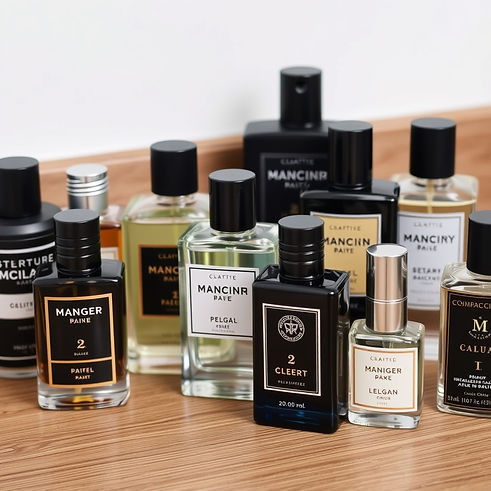
Don’t be afraid of cologne. Most men today don’t wear it because they’ve never been taught how, but many manly men of an older generation knew its value. I recently had a stewardess on an airplane lean over to hand me a drink and say, “You smell wonderful. I want my husband to smell like you!” The trick is to make sure your cologne is subtle—a discovery (for women, whose sense of smell is greater than our own) not an announcement (something that hangs around after you leave a room). Make sure the scent suits you—and remember that a little goes a long way.

About the Men's watch
Everyone has a smartphone now, so who needs a watch? Anyone who wants to show style does. A fine watch is one of the distinguishing features of a refined man, offering its user both fashion and utility. And a fine watch doesn’t have to be a traditional model; it can be a modern sports watch that measures our vital signs, takes calls and is a backup to our phones. Many of these are handsome and useful. A watch is not mere jewelry but a tool that can serve a variety of functions. This is why a watch is still manly.