


The Heroic Gent’s Philosophers: Heraclitus
- frankminiter
- Feb 26
- 3 min read
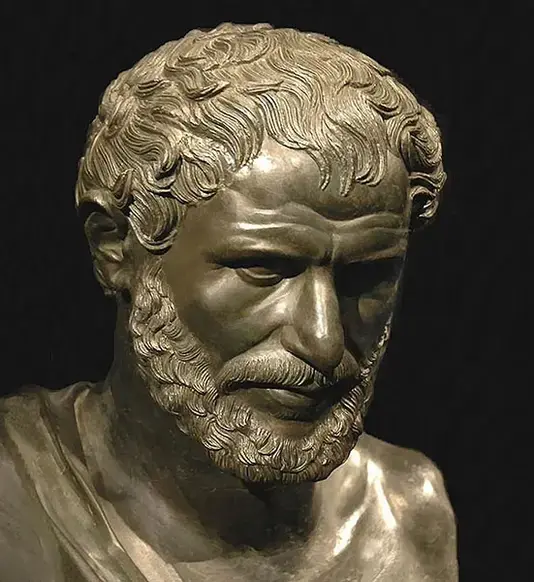
This late 6th to early 5th century B.C. thinker fundamentally changed philosophy by shifting the focus from static explanations of the universe to a dynamic vision of reality defined by change, tension, and underlying unity.
Heraclitus framed the cosmos in geological proportions.
Before Heraclitus, many pre-Socratic philosophers attempted to articulate a stable, primary substance that explained everything; for example, Thales of Miletus proposed water as the fundamental principle (archê), while Anaximenes suggested it was air. These thinkers were revolutionary in moving away from mythological explanations toward rational inquiry, but they still adhered to permanence. Heraclitus redirected this search. Instead of identifying a stable material substance, he argued that change itself is the fundamental reality.
His most famous idea—often summarized as “you cannot step into the same river twice”—captures his doctrine of flux. Although the exact wording is preserved only indirectly, the idea reflects his belief that everything is in constant motion. Stability, for Heraclitus, is an illusion created by the balance of opposing forces. This was a dramatic departure from the assumption that truth must be unchanging. By declaring change to be essential rather than accidental, he reshaped metaphysics.
Equally transformative was his concept of the Logos. Heraclitus used this term to describe the rational principle or underlying order governing the cosmos. Though the world appears chaotic, it is structured by a unifying logic that humans can come to understand. This idea introduced a profound philosophical tension: reality is both ever-changing and rationally ordered. Later thinkers would build entire systems around this insight. The Stoics, for example, adopted the Logos as a central doctrine, identifying it with divine rationality permeating nature in all its change with the seasons and, as we now understand it, as even species can evolve with new conditions.
Heraclitus also revolutionized the concept of opposition. He argued that conflict is not merely destructive but creative. “War is the father of all things,” he famously wrote, suggesting that tension between opposites—day and night, life and death, hot and cold (or the political left and right of today)—produces harmony when kept in balance.
This notion of unity through opposition deeply influenced dialectical thinking. Philosophers such as Plato grappled with Heraclitus’ emphasis on change, while Aristotle developed more systematic accounts of substance and causation partly in response to earlier thinkers like him. Much later, G. W. F. Hegel would echo Heraclitean themes in his dialectical method, emphasizing development through contradiction.
The Founders of America applied this philosophy as they wrote the U.S. Constitution and so balanced the branches of government against each other and with other checks and balances.
Perhaps most importantly, Heraclitus changed philosophy’s attitude toward knowledge. He criticized people for living as though they had private understandings rather than grasping the common Logos. Philosophy, for him, required awakening to a deeper rational structure hidden beneath appearances. This emphasis on insight over opinion helped shape the philosophical distinction between mere belief and genuine understanding.
Heraclitus’ ideas altered the trajectory of Western thought by redefining reality as dynamic, structured by tension, and governed by rational law. He prompted later philosophers to confront the problem of change, the unity of opposites, and the relationship between reason and the cosmos. By making flux and conflict central to metaphysics, he ensured that philosophy would never again assume that permanence was more fundamental than transformation.
His impact is so profound that there have been many quotes misattributed to him. My favorite is: “Out of every one hundred men, ten shouldn’t be there, eighty are just targets, nine are the real fighters, and we are lucky to have them, for they make the battle, ah, but the one, one is a warrior, and he will bring the others back.”
This was not his writing, but the idea that the man in tune with opposites, with opposing beliefs, and then with the actual balance of things is a man who can bring everyone together as he leads us to greater things would likely appeal to Heraclitus.


Comments